


What happens when social workers´ line of thinking meets with teachers´ line of thinking? Miðskarð gives answer to this question throughout this book from his study of how consulting sessions with social workers influence school professionals´ further perspectives on how to deal with issues in vulnerable children´s lifeworlds. The theoretical framework is mainly based on Hannah Arendt´s political theorisations, which is placed in an existential phenomenological tradition.
This book is mainly for social workers and student social workers in Denmark, England and those in other countries that are interested in interprofessional working set in Denmark with a contrast from England. However teachers (maybe mostly schoolleaders, form-teachers and teachers in pedagogical learning centres), early childhood pedagogues and managers and leaders in the family social work sector and in the educational sector will also find gold in this book. Lastly students and scholars who work with Hannah Arendt will find the compressed introduction and the implementation of Arendt´s theorisations of high interest.
This book is an important contribution to our understanding of multi-professional working and is highly recommended. Nick Frost, Emeritus Professor of Social Work, Leeds Beckett University, Leeds, UK
It is rare that one comes across a new perspective like Miðskarð´s on the work of Hannah Arendt, especially with regard to the application of her ´philosophical´ ideas. Joop Berding, PhD, philosopher of education and author, the Netherlands
Miðskarð demonstrates that Arendt´s theorisations can be useful for gaining new knowledge about interprofessional working, which traditional books on interprofessional working do not address. Inge Schiermacher, former lecturer in social work at University College Copenhagen, Denmark
This book is mainly for social workers and student social workers in Denmark, England and those in other countries that are interested in interprofessional working set in Denmark with a contrast from England. However teachers (maybe mostly schoolleaders, form-teachers and teachers in pedagogical learning centres), early childhood pedagogues and managers and leaders in the family social work sector and in the educational sector will also find gold in this book. Lastly students and scholars who work with Hannah Arendt will find the compressed introduction and the implementation of Arendt´s theorisations of high interest.
This book is an important contribution to our understanding of multi-professional working and is highly recommended. Nick Frost, Emeritus Professor of Social Work, Leeds Beckett University, Leeds, UK
It is rare that one comes across a new perspective like Miðskarð´s on the work of Hannah Arendt, especially with regard to the application of her ´philosophical´ ideas. Joop Berding, PhD, philosopher of education and author, the Netherlands
Miðskarð demonstrates that Arendt´s theorisations can be useful for gaining new knowledge about interprofessional working, which traditional books on interprofessional working do not address. Inge Schiermacher, former lecturer in social work at University College Copenhagen, Denmark
BØGER
Her finder du kulturhistoriske bøger om vores forhistorie, arkæologi og historie. Den kulturhistoriske webshop har alt fra bestsellere til det meget nørdede. Gå på opdagelse blandt mere end 17.000 titler!
Kategorivisning er forlagenes valg.



Kelternes verden - Europas urkraft
9788793251618
Simon James, Morten Warmind, Jes Martens, Mette Løvschal, Flemming Kaul, Xenia Pauli Jensen, Orla Madsen, Martin Winther Olesen, Constanze Rassmann og Esther Stuckler Jeppesen.
250,00 DKK
Tilbud
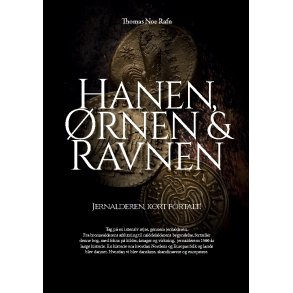
Hanen, Ørnen & Ravnen Jernalderen, kort fortalt!
9788776918736
Thomas Noe Rafn
250,00 DKK
212,50 DKK